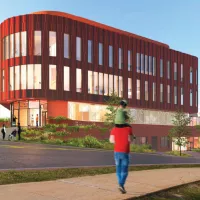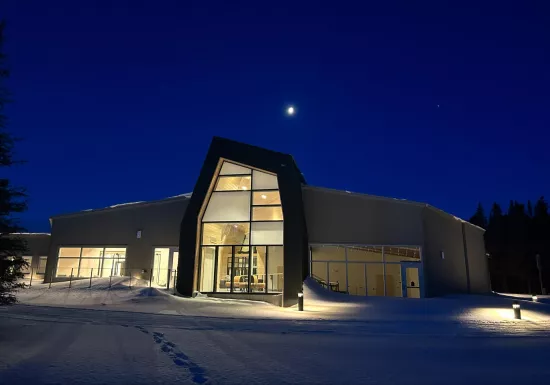
Gros Morne National Park Visitor Centre
Cultural and Recreational
Rocky Harbour, NL, CA


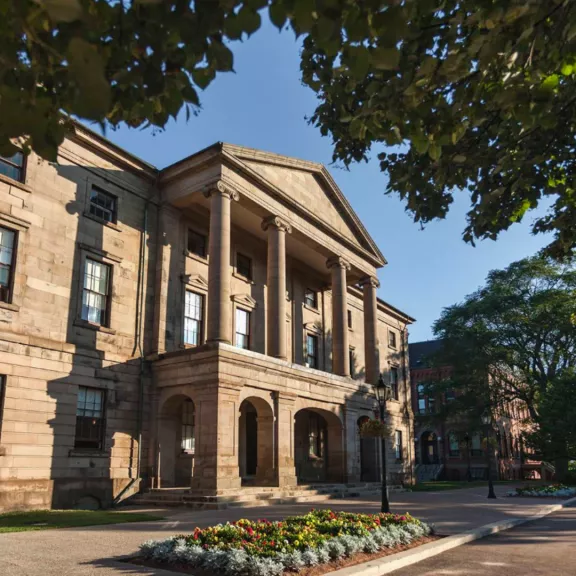
Photos © Province House National Historic Site
In the heart of Charlottetown, Province House stands as a cornerstone of Canadian history. Owned by the Province of PEI, the site has a unique dual identity as both the historical location of the Charlottetown Conference of 1864 and the seat of Prince Edward Island’s Provincial Legislature since 1847. This National Historic Site is more than a building; it is a symbol of democracy. Today, Pomerleau is leading a restoration that honours its legacy while integrating modern systems for a sustainable future.
Province House is the oldest building still used for provincial legislation. Its historical significance and architectural character make this project a delicate balance between preservation and modernization. The scope of work spans the entire building and focuses on upgrading core systems while reinstating and protecting historic architectural elements. Although the PEI provincial government is currently operating from a temporary location, the building is scheduled to reopen in 2026.
The project includes comprehensive upgrades to the building’s mechanical and electrical infrastructure. This includes tying Province House into the central district heating system, installing new geothermal well systems, and upgrading HVAC and electrical distribution systems to improve performance, efficiency, and long-term resilience. Information technology and security systems are also being modernized to support contemporary legislative operations.
At the same time, significant attention is being given to the reinstatement of heritage finishes throughout the building. Wall and ceiling finishes are being carefully restored, while historic architectural elements are repaired or replicated using traditional techniques. The scope also includes the installation of a new elevator and stairs to improve accessibility, along with landscaping work that complements the historic character of the site.
One of the most significant challenges of the Province House project is the need for a specialized workforce experienced in heritage restoration. This niche expertise is essential to ensuring that interventions preserve the building’s authenticity while meeting modern standards.
Existing conditions also present unique technical challenges. For example, reinforcing a 178-year-old timber floor requires carefully engineered solutions that strengthen the structure without compromising its historic character. Strict control of temperature and humidity levels is required at all times and, once restored, historic elements must be carefully protected during subsequent work in adjacent areas.
To overcome these challenges, innovation plays a critical role in safeguarding the integrity of Province House throughout the restoration process. Matterport scanning was used early in the project to capture the historical appearance of architectural features before renovations began, creating a detailed digital record to guide restoration work.
IoT sensors have been installed to monitor humidity and temperature in real time, which is essential in a heritage environment. Maintaining relative humidity below 60 percent is critical to preserving historic materials such as wood, plaster, and stone. The building’s connection to district energy steam and the use of geothermal heating further support environmental performance while respecting heritage constraints.
To restore damaged plaster mouldings, traditional mould-making techniques are being used. When original elements were partially broken, intact sections were carefully cast to replicate missing details, ensuring visual continuity and historical accuracy. The OpenSpace visual intelligence platform is also being used to capture a complete visual record of the project, supporting documentation, coordination, and long-term archival value.
Environmental considerations are addressed through a standard environmental management plan, with a strong focus on noise and dust mitigation due to the building’s proximity to adjacent structures. Careful sequencing, monitoring, and protective measures are implemented to minimize impacts while maintaining a safe and controlled work environment.
The Province House project includes an Indigenous Participation Plan focused on maximizing Indigenous involvement across four key areas: skills development, human resources, Indigenous business participation, and innovation and outreach. This plan supports meaningful collaboration, knowledge sharing, and long-term capacity building, aligning heritage restoration with broader social and economic objectives.
Delivering a project of this nature requires highly specialized expertise. Pomerleau’s extensive industry knowledge and connections allowed the team to identify and engage trades with proven experience in heritage construction environments. This expertise is essential when working with rare materials, traditional construction methods, and historically sensitive elements that demand precision, care, and respect for original craftsmanship.
Pomerleau is proud to contribute to the restoration of Province House, a project that safeguards Canada’s history while embracing modern sustainability and innovation. By integrating cutting-edge technology, we are ensuring that this iconic landmark continues to inspire future generations.