

Sustainable Development Report
Check out our sustainability report
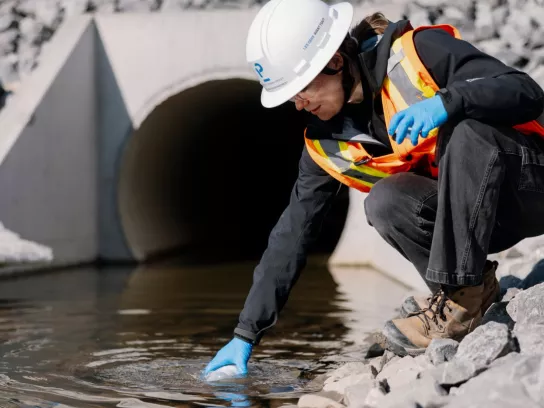
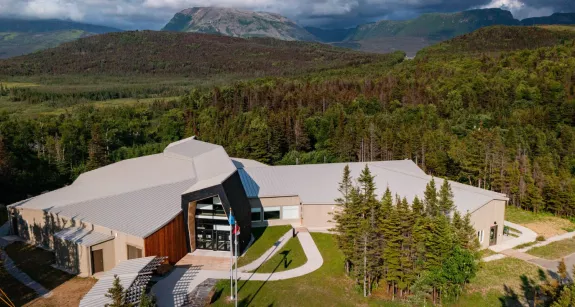
Integrating sustainable development principles into all our practices is essential to advancing the industry. Our sustainable development plan guides our actions by placing environmental and social issues at the heart of our projects. Along with our clients, partners, and investors, we are committed to decarbonizing our operations, building sustainably, and adopting circular economy practices to contribute to a low-emission economy. We also collaborate with Indigenous communities across the country to build lasting partnerships and share our expertise.
Our employees are at the heart of our values. We create a healthy and inclusive work environment where everyone can achieve their full potential while preserving their physical and mental well-being.
To get an overview of our performance in 2025, consult our report.
To reach net zero emissions by 2050, we are committed to the Government of Canada’s Net-Zero Challenge in 2023.
Our plan targets emissions generated by our construction activities, as well as those upstream and downstream from our worksites. We focus our efforts on the emission sources specific to our operations, which account for over 95% of our indirect emissions.

81%
8%
79%
We are working to reduce the environmental footprint of our construction sites by optimizing resource use through a circular approach.
Our plan for the circularity of goods and materials prioritizes reducing resource consumption, protecting the ecosystems that produce them, and reusing, recycling, and repurposing existing materials. We work hand in hand with our suppliers to gain full visibility into their waste management practices.
We are also gradually integrating responsible procurement practices to develop a better understanding of the sustainable practices of our strategic suppliers. We have launched a thorough assessment of our ecosystem’s practices, starting with our key suppliers, to support them in improving their own practices and to move forward together toward more responsible solutions.
While our current methods provide valuable data and insights into our practices, there is room for improvement. Our goals are as follows:
In 2026, our goal is to divert 75% of our waste materials from landfill.
At Pomerleau, we believe that environmental protection, community engagement, and good governance are key factors for any construction company aspiring to be sustainable. That’s why we are committed to conducting our operations with respect for pollution prevention, our ecosystems, our resources, and our communities.
Pomerleau has optimized 70% of the construction sites participating in the "Chauffer Mieux" (Heat Better) program. This has improved the efficiency of temporary heating on our sites, resulting in the avoidance of 2,200 tCO2e—equivalent to 4% of our Scope 1 emissions for the year.
We have built solar-powered construction trailers, which reduce diesel consumption by 80% at sites not connected to the electrical grid.
The number of Pomerleau projects incorporating low-carbon concrete has increased, rising from seven to nine in 2025. The use of low-carbon concrete has resulted in the avoidance of 8,637 tCO2e—the equivalent of 4,584 round-trip flights between Montreal and Paris. We have also signed the "Pact for Responsible Buildings" (Pacte pour des bâtiments responsables) from the Climate Smart Buildings Alliance, which promotes the use of materials with a low carbon footprint.
We are accelerating the electrification of our vehicle fleet, which now includes 40 electric vehicles. We also maintain a financial support program to encourage our employees to switch to electric personal vehicles—an initiative that 168 people have taken advantage of since its inception.
Here you will find our Sustainable Development reports from recent years: