

Hydroelectric Construction
- Projects
- 100+
- Regions
- 5+
- Years of experience
- 40+
Modernizing Infrastructure Essential to the Energy Transition
Canada’s hydroelectric infrastructure is entering a new phase in its life cycle. As the demand for electricity grows, energy producers must modernize aging assets, increase generation capacity, and strengthen the reliability of the power grid. These investments often take place at remote sites or within operational hydroelectric plants, all while ensuring that safety, continuity of operations, and facility performance remain uncompromised.
Pomerleau supports energy producers, Crown corporations and their partners in the construction, rehabilitation and modernization of critical hydroelectric infrastructure across Canada. Our strength lies in our integrated expertise in civil engineering, construction management and multidisciplinary coordination. From planning through commissioning, our teams bring together the right expertise to reduce risks, manage interfaces and ensure the long-term performance of infrastructure essential to the energy transition.
Adapting hydroelectric infrastructure to tomorrow’s challenges
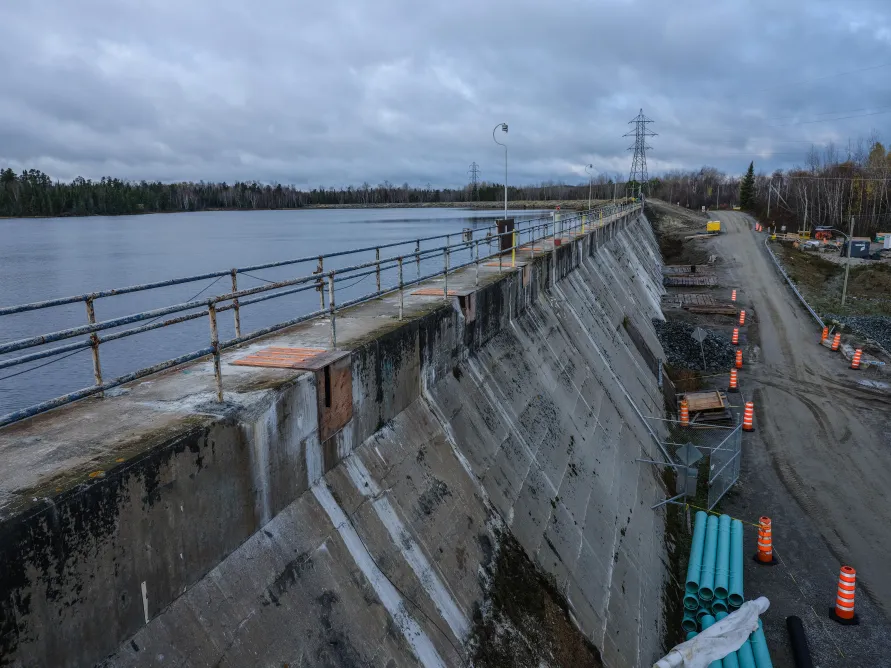
Dams, hydroelectric generating stations, water intakes, spillways, galleries, dikes, reservoirs and concrete structures are designed to last for decades. Their long-term performance, however, requires rigorous inspection, asset maintenance and major rehabilitation programs. As this infrastructure ages, interventions must extend its service life, enhance its resilience and, where possible, optimize its generating capacity.
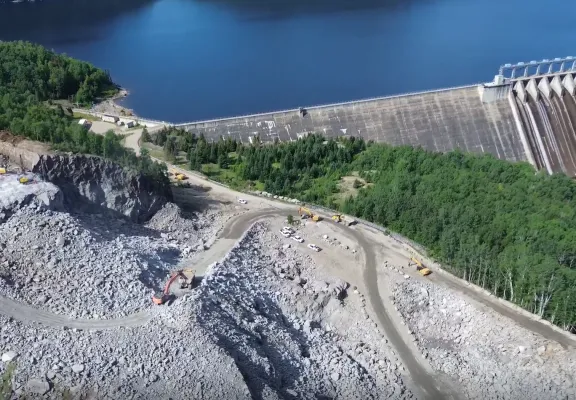
Our experience spans both the rehabilitation of existing hydraulic structures and the construction of new energy infrastructure. On projects such as Bersimis-2, Manic-2 and Yellow Falls, Pomerleau works in complex, highly regulated environments where quality of execution, work traceability and close coordination with the client are critical.
From power generation to transmission
Energy reliability extends beyond the generating station. It depends on the entire system, from generation to transmission and distribution. In addition to hydroelectric infrastructure, our teams build and modernize electrical substations, converter stations, power transmission lines and other strategic infrastructure that supports grid resilience.
Projects such as the Appalaches and Montérégie converter stations demonstrate our ability to work on complex power transmission infrastructure. This understanding of the entire grid allows us to anticipate interfaces between civil works, electrical systems and the client’s operational requirements.
Modernizing critical assets without interrupting operations
Rehabilitating an operating generating station requires an exceptional level of planning. Work windows are limited, shutdown and access requests must be carefully planned, and each sequence must safeguard continuity of service. Our teams work in close coordination with the client’s operations teams to isolate work areas, manage risks and carry out interventions at the right time.
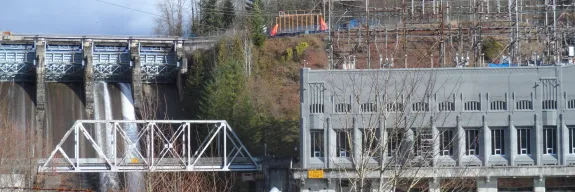
This approach can involve highly specialized work, such as opening an existing generating station to allow new turbines to be brought in, widening certain access points, and coordinating civil, mechanical, electrical and demolition work while the facility remains operational. It is precisely at these complex interfaces that Pomerleau brings the greatest value: a team capable of coordinating execution, quality, and health and safety while adapting to site realities.
Delivering hydroelectric infrastructure responsibly
The performance of a hydroelectric project is measured not only by the quality of the completed infrastructure, but also by how it is delivered. Health and safety are integrated into planning, work methods and day-to-day site coordination, particularly when work takes place near water, at height, in confined spaces, during critical lifts, or near energized equipment and operating facilities.
Before each intervention, our teams assess risks, establish control measures, and coordinate permits, access, energy isolation and work sequences with operations teams. Training, pre-work meetings, field supervision and the sharing of lessons learned support a culture of prevention where everyone is empowered to take action when conditions change. This rigour helps protect workers, partners, client operations and neighbouring communities.
Environmental management is also integrated into our construction methods. Our teams plan for water management, spill prevention, erosion and sediment control, as well as measures to protect biodiversity and natural environments. They monitor regulatory requirements to minimize construction impacts and support the social acceptance of energy projects.
Building lasting partnerships with Indigenous communities
Many hydroelectric projects are carried out on the traditional territories of Indigenous communities. Meaningful collaboration begins well before site mobilization. It is built on listening, transparency and recognition of each community’s priorities, knowledge and aspirations.
Pomerleau favours models that promote co-development and lasting benefits. Depending on the project context, this approach may include joint ventures, shared governance, partnerships with Indigenous businesses, local procurement strategies, training or employment opportunities. Collaboration with First Nations and other Indigenous Peoples contributes to better project planning, stronger long-term relationships and lasting value within communities.
Delivering complex, large-scale projects in challenging environments
Hydroelectric projects are often carried out far from major urban centres, in northern environments with challenging weather conditions and limited access. Workforce mobilization, accommodations, training and security screening, material transportation, the availability of specialized equipment, and delivery coordination therefore become central components of the project delivery strategy.
Pomerleau turns these constraints into a practical execution plan. Our teams prepare mobilization strategies, establish construction sequences, secure the supply chain and monitor risks that could affect costs or schedules. When engineering evolves during construction, our collaborative approach allows us to quickly assess the impacts, coordinate changes and maintain progress.
Our national mobilization capabilities also allow us to manage multiple complex energy projects simultaneously. Experience gained on projects such as Muskrat Falls, La Romaine, Manic-2 and Manic-3 supports large-scale execution without losing sight of each site’s specific requirements. Our teams combine the strength of a Canada-wide contractor with practical knowledge of local markets, partners and conditions.
Digital planning further strengthens this approach. BIM modelling, existing-conditions surveys and data-driven tools facilitate multidisciplinary coordination, construction sequencing visualization and decision-making. When used strategically, artificial intelligence and digital modelling can also help identify potential issues earlier and optimize energy assets throughout their life cycle.
Developing the right solutions from the earliest stages of a project
Decisions made early in the process determine a significant portion of a hydroelectric project’s cost, risk and schedule. By involving the contractor early in the process, the client benefits from a perspective grounded in construction realities before design decisions are finalized.
Our specialists collaborate with engineering firms, equipment suppliers and operations teams to assess constructability, validate access requirements, optimize construction sequences and identify critical interfaces. This early involvement makes it possible to compare delivery options, better plan temporary works and long-lead procurement, and develop more reliable estimates.
Pomerleau has extensive experience with a range of project delivery models, including Early Contractor Involvement (ECI), collaborative delivery models, design-build and construction management. The approach is tailored to the project’s maturity and the owner’s priorities. In every case, the objective remains the same: to create a collaborative environment where issues are addressed early, decisions are documented and risks are allocated to the parties best positioned to manage them.
By maintaining a strong connection between planning and execution, our teams anticipate field constraints early in the process. This approach facilitates the transition to construction, strengthens cost and schedule control, and leads to solutions that reflect the realities of construction, operations and maintenance.
Projects that address the challenges facing energy producers
Our energy infrastructure portfolio demonstrates our ability to work across every stage of the asset life cycle, on projects of various sizes and in multiple regions across Canada. These projects show how our expertise translates into practical solutions to the challenges of rehabilitation, operational continuity, mobilization and integration into the power grid.
At Bersimis-2, Pomerleau rehabilitated the foundations of Dike 2 in a context involving stability and water management challenges. Combined expertise in geotechnical engineering, construction water management and heavy civil works made it possible to adapt the solution to observed conditions, manage water flows and strengthen the long-term integrity of the structure, while protecting aquatic environments.
La Romaine demonstrated Pomerleau’s ability to structure the delivery of major hydroelectric infrastructure in a northern environment. The integration of planning, civil engineering and logistics made it possible to coordinate resources and construction sequences on a large scale, while meeting requirements for quality, safety and responsible land management.
At Muskrat Falls, Pomerleau incorporated the challenges of remoteness, climate and supply logistics into the project delivery strategy from the outset. This planning helped secure the mobilization of resources and equipment, maintain continuity of civil works and effectively coordinate project partners in a complex northern environment.
At Manic-2 and Manic-3, Pomerleau coordinated the modifications to civil works required for the replacement of turbine-generator units, while taking power generation requirements into account. Effective management of civil, mechanical and electrical interfaces, combined with rigorous planning of access and work windows, helped ensure safe execution while the generating stations remained operational.
At the Appalaches and Montérégie converter stations, Pomerleau coordinated civil works, electrical systems and operational requirements. This ability to effectively manage complex interfaces supported the integration of strategic equipment and contributed to the reliability of power transmission infrastructure.
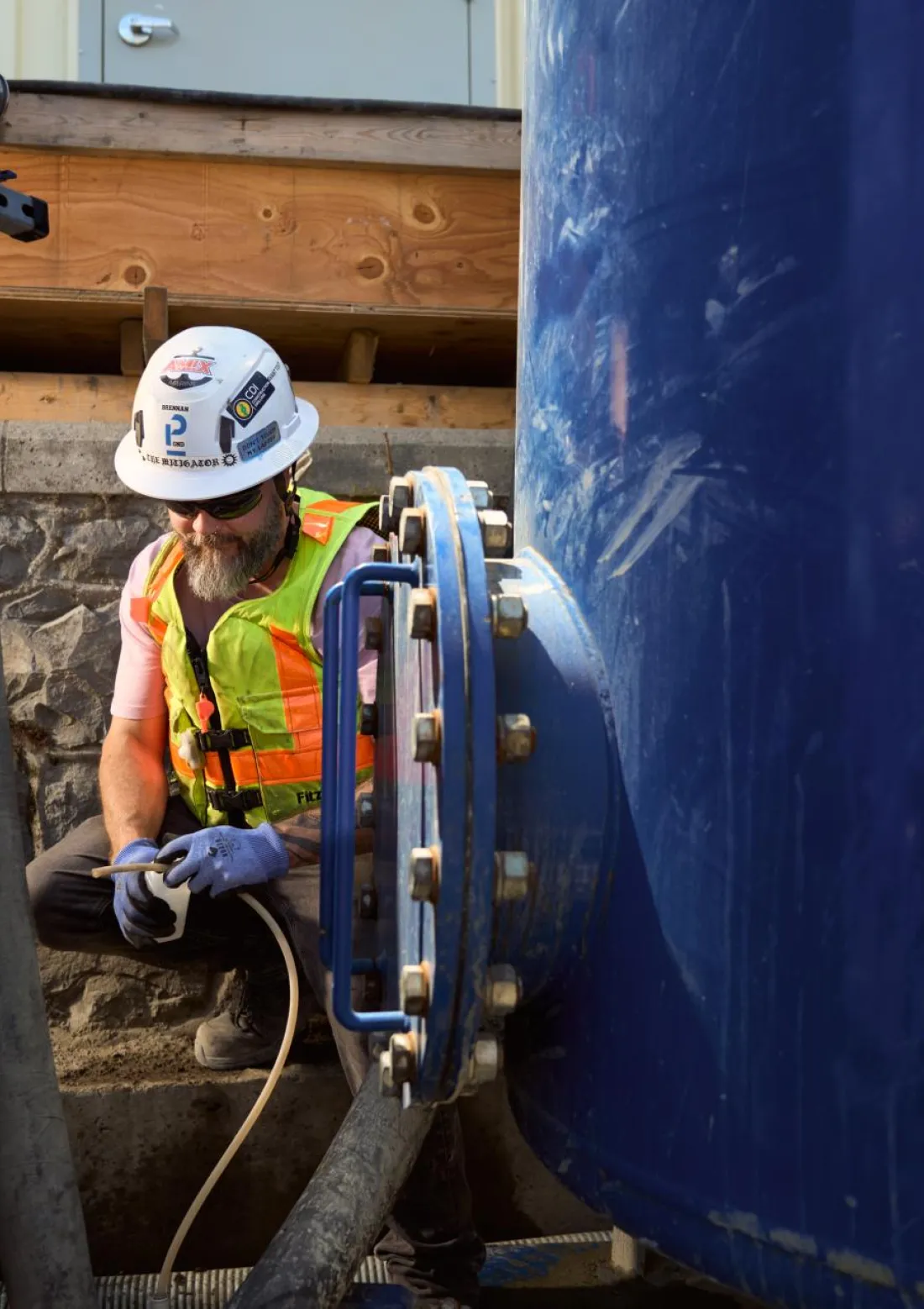
Why choose Pomerleau for your hydroelectric projects?
Choosing Pomerleau means working with a partner that turns the technical and operational complexity of hydroelectric projects into more predictable, seamless and controlled project delivery.
We help clients modernize their infrastructure without compromising operational continuity. Rigorous planning and effective management of civil, mechanical and electrical interfaces help reduce unforeseen issues and protect the reliability of facilities throughout construction.
Early involvement from our teams allows constructability to be validated sooner, access and procurement challenges to be anticipated, and options to be clarified before construction begins. This gives clients more reliable information to make timely decisions and move their projects forward with confidence.
From operating generating stations to major hydroelectric complexes in remote regions, we mobilize the teams, resources and partners needed to maintain progress. This capability supports smoother, more predictable project delivery and helps energy producers advance their long-term capital programs.
Let’s talk about your next hydroelectric project
Are you planning the construction of a hydroelectric generating station, the rehabilitation of a dam, the modernization of an operating facility or upgrades to the power transmission grid? Our experts can collaborate with your teams from the earliest stages to develop a project delivery strategy aligned with your technical, operational and business objectives.